ChatGPT vs. Perplexity vs. Gemini: Where Your Brand Shows Up
TL;DR
- ChatGPT, Perplexity, and Gemini use fundamentally different citation mechanisms — what works for one doesn't automatically translate to the others.
- Perplexity is retrieval-first and favors recent, well-structured web content; ChatGPT is training-data-first and favors established entity recognition; Gemini integrates Google's Knowledge Graph.
- A full AI search strategy requires platform-specific optimization, not a one-size-fits-all approach.
- Most brands currently optimize for none of them systematically — which means the bar for citation is currently low.
The SaaS Founder’s Unpleasant Discovery
A B2B SaaS founder spent nine months optimizing their company’s content for ChatGPT visibility. They studied which domains appeared in ChatGPT responses, analyzed the structure of cited pages, and built a content strategy around authoritative positioning. Their brand began appearing in ChatGPT answers. Success, right?
Then they tested the same queries on Perplexity.
Their brand didn’t appear once. Competitors they’d never heard of showed up instead. The founder looked at the Perplexity citations—clean URLs, recent publish dates, crisp formatting, specific data points. They looked back at their ChatGPT-optimized content—dense paragraphs, nuanced positioning, training-data bait. Completely different playbooks.
That founder had just bumped into what nobody talks about: the three biggest AI search platforms are running three completely different citation games.
The Question Nobody’s Asking Yet
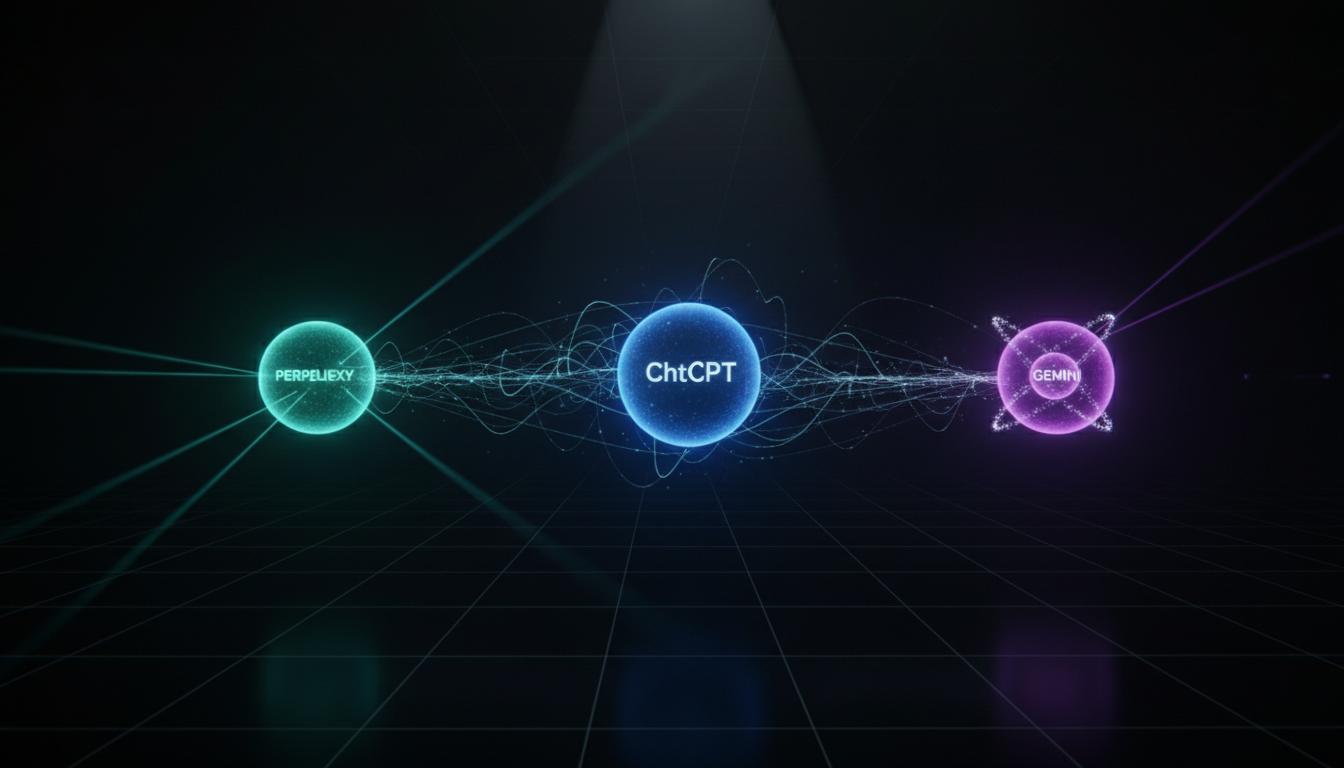
What if visibility on ChatGPT, Perplexity, and Gemini isn’t just about producing good content, but about understanding three fundamentally different retrieval architectures that each have their own hidden rules?
That’s not rhetorical. It’s what we’re finding in systematized brand visibility testing across all three platforms through late 2025.
Most SEO professionals treat “AI search visibility” as one problem. It isn’t. It’s three separate problems wearing the same name.
How We Noticed: The Pattern in the Divergence
We started noticing the divergence while running citation audits for clients across different verticals—fintech, HR software, e-learning platforms, analytics tools. The same brand would appear consistently in ChatGPT responses and then mysteriously vanish in Perplexity queries for nearly identical search intent.
The first instinct was to blame crawlability or domain authority. But deeper investigation revealed something structural: each platform was literally retrieving information using different mechanisms, prioritizing different source characteristics, and weighing “citability” through completely different lenses.
ChatGPT’s answers drew heavily from its April 2024 training data, with strong preference for brands that had achieved entity status (consistent mentions across multiple authoritative sources before the cutoff). When ChatGPT did cite directly, it favored domains that appeared in its training set as experts—Wikipedia (7.8% of all citations), established publications, and recognized brand properties.
Perplexity, by contrast, was conducting real-time web searches against a 200+ billion URL index at query time. Its citation selections were made moment-to-moment based on current content quality, structure, recency, and topical relevance. The same query yielded different citations different times of day depending on what fresh content had been published.
Gemini operated from a third playbook entirely: it could access Google’s proprietary Knowledge Graph, which pre-categorized entities, their attributes, and relationships—giving Gemini instant context about whether a business even existed as a recognized entity before it processed your content.
Each platform was asking different questions: ChatGPT asked “Was this source important in my training data?” Perplexity asked “Does this page directly answer today’s query better than alternatives?” Gemini asked “Does this entity have verified attributes in the Knowledge Graph?”
Introducing: Citation Platform Divergence
We’re calling it Citation Platform Divergence—the structural reality that the three dominant AI search engines retrieve and cite sources through incompatible mechanisms, making cross-platform visibility strategies nearly impossible without platform-specific optimization.
This isn’t a bug or a temporary state. It’s baked into the architecture of each system.
Understanding Citation Platform Divergence changes how you think about “getting ranked in AI.” It’s not one optimization challenge. It’s three parallel challenges that happen to return answers to similar queries.
The Three Architectures Explained
1. ChatGPT: The Training Data Entity Recognizer
ChatGPT’s entire citation system rests on what was in the model’s training corpus as of April 2024. The model doesn’t re-search the web for most queries—it’s generating answers from learned patterns, and when it does cite a source, it’s citing from the set of sources that appeared in training data frequently enough to create strong entity associations.
How it works architecturally: GPT-4o was trained on approximately 570GB of curated internet text, academic papers, and domain-specific data through April 2024. The model learned associations between entities (your brand), problem categories, solutions, and trustworthiness signals. When you ask ChatGPT about a SaaS category, it recommends brands based on three factors:
- Entity recognition from training data (40%): Is this brand mentioned consistently across multiple independent sources in the training set?
- Authoritative list mentions (41%): Does this brand appear on expert roundups, “best of” lists, and industry rankings in training data?
- Third-party credibility signals (19%): Awards, certifications, customer reviews that appeared in training data.
The visibility wall: If your brand wasn’t mentioned in training data by April 2024—or wasn’t associated with your solution category in that data—ChatGPT’s model doesn’t know you exist. It’s not about your current content quality. It’s about whether you achieved entity status three years ago.
Brands that went online after April 2024 are structurally invisible to ChatGPT’s base recommendations, though newer iterations with real-time search capabilities partially offset this. However, the default GPT-4o remains training-data-dependent.
Citation behavior: ChatGPT cites Wikipedia 7.8% of the time (more than any other single source) because Wikipedia was heavily represented in training data and treated as authoritative. It cites established publications, well-known brand properties, and domains that appeared frequently in curated sources. Novel, recent content rarely gets cited because it wasn’t in training data.
2. Perplexity: The Real-Time Web Retriever
Perplexity operates on a fundamentally different principle. Instead of generating from training data and citing sources mentioned in that data, Perplexity conducts actual web searches in real-time, ranks results by multiple content quality signals, and constructs answers by synthesizing top-ranked sources. It’s retrieval-augmented generation (RAG) at scale.
How it works architecturally: When you submit a query to Perplexity, the system immediately:
- Decomposes your query into semantic sub-questions
- Conducts simultaneous searches across its 200+ billion URL index
- Filters for source credibility and content quality
- Ranks results using proprietary signals (recency, author credibility, content structure, specificity, load speed, freshness)
- Synthesizes top 5-10 results into a natural-language answer with numbered citations
The visibility mechanics: Perplexity’s citation criteria heavily favor:
- Recency: Content published in the last 3-6 months beats older content on equivalent queries
- Structure clarity: Pages with clear headers, data blocks, schema markup, and readable formatting are 28% more likely to be cited
- Direct answers: Content that answers the query in the first 1-2 paragraphs ranks above content that buries the answer in lengthy exposition
- Named authorship: Content attributed to a real person with a credentials link is cited more than anonymous content
- Specificity over opinion: “Our data showed a 23% increase” beats “the market is growing” every time
- Load speed: Pages that load in under 3 seconds are prioritized; slow sites are skipped
Citation behavior: Reddit appears as Perplexity’s most-cited source (6.6% of citations) because Reddit threads often contain crowd-sourced answers to niche questions, named contributors, and recent discussions. Perplexity cites more sources per answer than ChatGPT (averaging 8-10 sources vs. ChatGPT’s 2-4) because it’s designed to triangulate information across multiple fresh sources rather than rely on training data associations.
A brand publishing structured, recent, well-authored content with clear data can achieve Perplexity visibility within weeks—even with no brand history—because Perplexity doesn’t care about entity status. It cares about answer quality today.
3. Gemini: The Knowledge Graph Entity Linker
Google’s Gemini takes a third approach entirely. Gemini can access Google Search’s real-time index and, crucially, Google’s proprietary Knowledge Graph—a structured database that maps entities (people, companies, products, concepts) and verifies their attributes and relationships.
How it works architecturally: Gemini processes queries with three parallel paths:
- Knowledge Graph lookup: When you ask about a business or product, Gemini checks if the entity exists in the Knowledge Graph. If it does, it has immediate access to verified attributes (founding date, category, key executives, products, service areas)
- Google Search integration: Gemini searches Google’s index for recent, relevant content and real-time signals
- Answer synthesis: Gemini combines Knowledge Graph structure, search results, and model generation into a response
The visibility mechanics: Getting into Gemini visibility requires:
- Knowledge Graph presence: Your business must be a recognized entity in Google’s Knowledge Graph. This typically happens through consistent mentions across verified sources, Wikipedia presence, or explicit Google Business Profile optimization
- Knowledge Graph completeness: The more filled-out attributes your Knowledge Graph entity has, the more confident Gemini is in referencing you. A business with a complete Knowledge Graph card (description, category, service areas, reviews, opening hours) gets preferential treatment
- Google Search quality signals: Beyond the Knowledge Graph, Gemini still weighs Google Search ranking factors—domain authority, content freshness, semantic relevance, and page quality
Citation behavior: Gemini’s citations are the most “verified” of the three platforms because they’re grounded in Knowledge Graph structure. When Gemini recommends a brand, it’s saying “Google’s Knowledge Graph recognizes this entity.” This creates a self-reinforcing visibility loop: brands with complete Knowledge Graph profiles get recommended by Gemini more often, which drives more traffic to those properties, which reinforces their entity status.
Gemini rarely cites obscure brands or new market entrants because the Knowledge Graph doesn’t recognize them yet. But once a brand achieves Knowledge Graph status, Gemini visibility becomes relatively stable.
How This Plays Out in Real Domains
The divergence becomes clearer when you look at specific domains.
Fintech SaaS: A founder asked ChatGPT, “What’s the best invoice financing platform?” ChatGPT recommended three established players (entity status, training data heavy hitters). The same query on Perplexity returned six options including one bootstrapped startup that had published a detailed technical case study two months prior. Gemini followed Google Search ranking, which favored established brands but also surfaced newer platforms with good Google Business Profiles and high review ratings.
HR Tech: A director of people operations asked all three about “employee engagement platforms.” ChatGPT listed predictable names (Gallup, Qualtrics, established platforms from training data). Perplexity included newer entrants with recent, well-structured ROI calculators and implementation guides. Gemini returned options from its Knowledge Graph that matched the query but showed preference for platforms with complete Google Business Profiles.
E-learning: Same pattern. ChatGPT mentioned established learning platforms from training data. Perplexity cited platforms with recent course catalogs and detailed learning outcome comparisons. Gemini recommended by Knowledge Graph status + Google Search ranking.
The point: you could dominate ChatGPT recommendations, be invisible in Perplexity, and have zero Gemini visibility—all simultaneously.
The Real Cost of Divergence
Citation Platform Divergence has four immediate implications:
1. One-Platform Optimization Is Leaving Two Tables Empty
If you’ve optimized your brand for ChatGPT visibility (entity status, brand mentions in training data sources), you’ve optimized for past recognition, not for current recommendation capacity on Perplexity (real-time content quality) or Gemini (Knowledge Graph completeness). You’re optimizing for a platform that can’t help new brands and ignores recency.
2. Perplexity Rewards Speed; ChatGPT Rewards Age
A brand that published exceptional content last month has zero chance of being cited by ChatGPT (training data ended April 2024) but a strong chance of being cited by Perplexity. This creates a time-dimension visibility problem: older brands dominate ChatGPT, newer brands can leapfrog on Perplexity, and only brands with complete Knowledge Graph profiles reliably appear in Gemini.
3. Knowledge Graph Absence Is Structural Invisibility in Gemini
You can have perfect Perplexity-optimized content and zero Gemini visibility if Google’s Knowledge Graph doesn’t recognize your entity. This creates a catch-22 for new brands: you need visibility to get Knowledge Graph inclusion, but you need Knowledge Graph inclusion for Gemini visibility.
4. Market Share Concentration Is Hiding Opportunity
ChatGPT dominates with 68% AI search market share as of early 2026, but that dominance is built on training data from 2024. Meanwhile, Gemini surged from 5.4% to 18.2% in a single year, driven by Android integration and Google Workspace embedding. Perplexity remains at 2% market share but has the highest engagement per session and the lowest optimization maturity—meaning the competitive bar for citation is currently very low.
Translation: Most brands aren’t optimizing for Perplexity at all, which means there’s an 18-month window where systematic Perplexity optimization could own that space before everyone figures it out.
Platform-Specific Optimization Starts Here
For ChatGPT Visibility:
- Build entity status before the next training data cutoff: Get mentioned in Wikipedia articles, industry roundups, major publications, and expert directories now, while the April 2024 cutoff is still the most recent
- Dominate your category in training data sources: Secure positions in “best of” lists, expert roundups, and authoritative compilations that are likely to be in future training datasets
- Associate your brand with the problem categories you solve: Get consistently mentioned alongside specific use cases, pain points, and industries so ChatGPT learns the association in training data
For Perplexity Visibility:
- Publish structured, recent content at regular intervals: Perplexity favors fresh content (3-6 month recency), so a quarterly content calendar with well-formatted answers beats annual deep dives
- Optimize for “answer first”: The first paragraph must directly answer the query. No exposition, no context-setting—answer first, depth second
- Add named authorship and credentials: Every piece of content should be attributed to a real person with a linked credentials page (LinkedIn, company bio, etc.)
- Use structured data and clear formatting: Headers, data blocks, bullet points, schema markup. 28% citation lift for structured vs. unstructured content
- Target recency: Perplexity cites content published in the last 3-6 months significantly more than older content. Update evergreen content quarterly, even if just to refresh the publish date
For Gemini Visibility:
- Audit and complete your Knowledge Graph presence: Go to Google’s Knowledge Panel for your brand and check what’s missing. Fill in: description, categories, service areas, social profiles, key executives
- Optimize your Google Business Profile: Complete description, categories, service areas, opening hours, links, photos, posts. A complete profile drives Knowledge Graph completeness
- Publish content that ranks in Google Search: Gemini’s recommendations are shaped by Google Search ranking. Don’t just create content—create content that ranks. Use SEO fundamentals: keyword research, on-page optimization, backlinks, page speed
- Build third-party credibility signals: Reviews, awards, industry certifications—these feed into Knowledge Graph attributes and Google Search ranking simultaneously
The Strategic Implication: It’s Three Markets, Not One
The unified “AI search” market is actually three distinct micro-markets with different mechanics:
-
The Legacy Market (ChatGPT): Training-data-dependent, rewards entity status and past recognition, moving slowly because training data cuts off. This market favors established brands. The bar for visibility is high (you need historical recognition).
-
The Speed Market (Perplexity): Retrieval-first, rewards recency and content quality, highly responsive to recent publishing. This market is undercompetitive because most brands don’t know how to optimize for real-time citation. The bar for visibility is currently low.
-
The Verification Market (Gemini): Knowledge Graph-dependent, rewards entity recognition and structured data, aligned with Google’s existing infrastructure. This market is consolidating around Google’s verification mechanisms. The bar for visibility is moderate but growing.
Most brands are trying to win all three with one content strategy. That’s like optimizing simultaneously for Google’s PageRank algorithm, TikTok’s FYP recommendation system, and LinkedIn’s engagement algorithm using the same content format. It doesn’t work.
What Changes in 2026
By the end of 2026, we expect:
- ChatGPT’s training data will cut at a more recent date (likely April 2025), which will expand entity recognition but won’t solve the fundamental training-data-dependency of the model
- Perplexity will likely introduce premium citation packages (similar to content placement), creating a new monetization vector and potentially changing citation selectivity
- Gemini will deepen Knowledge Graph integration through AI-powered entity extraction, making Knowledge Graph presence even more critical for visibility
The window for owning Perplexity visibility before market saturation is probably 18-24 months. Most brands won’t optimize for it until 2027.
The Actionable Insight: Stop Optimizing for “AI Search”
Your brand’s AI visibility challenge isn’t about “getting ranked in AI search.” It’s about maintaining platform-specific playbooks for three completely different retrieval systems, each with different mechanics, different citation criteria, and different competitive intensity.
That SaaS founder from the beginning of this post? Once they understood Citation Platform Divergence, they:
- Kept their ChatGPT strategy (entity status building) but deprioritized it, recognizing that visibility would come slowly and they couldn’t control it directly
- Built a Perplexity-first strategy (structured, recent, authored content published quarterly) and saw citations within 8 weeks
- Launched a Google Business Profile and Knowledge Graph optimization initiative (completing missing attributes, structured data markup) and waited 3-4 months to see Gemini recommendations appear
Within six months, their brand was visible across all three platforms, but with completely different content structures and publishing cadences supporting each one.
That’s not three strategies. That’s one meta-strategy that acknowledges the architecture underneath.
TL;DR
- ChatGPT is training-data-first (citation based on April 2024 entity status and source reputation in training data)
- Perplexity is retrieval-first (citation based on real-time content quality, recency, and direct answer quality)
- Gemini is Knowledge Graph-first (citation based on Google entity recognition and verified attributes)
- Citation Platform Divergence means optimizing for one doesn’t translate to the others
- Each platform requires fundamentally different content and strategy
- Perplexity is currently underoptimized, offering the fastest path to visibility
- Most brands aren’t systematizing AI search visibility—which creates opportunity
FAQ
Q: Does my ChatGPT visibility automatically give me Perplexity visibility?
No. ChatGPT cites based on training data entity status and source reputation, while Perplexity cites based on real-time content quality and recency. A brand visible in ChatGPT might be invisible in Perplexity if they’re not publishing recent, well-structured content. Conversely, a new brand publishing structured answers on Perplexity might be completely invisible in ChatGPT because ChatGPT doesn’t recognize them as an entity.
Q: How do I know if my brand is in Google’s Knowledge Graph?
Search “[Your Brand Name]” on Google and look for a card on the right side of the page with your logo, description, key facts, and related entities. If it exists, you’re in the Knowledge Graph. If not, you can claim or create your Knowledge Panel through Google Business Profile or Wikipedia (if eligible).
Q: What’s the fastest way to get cited by Perplexity?
Publish structured, authored content that directly answers a specific query in the first paragraph, with clear headers, specific data points, and fast load times. Perplexity favors content published in the last 3-6 months, so recency matters significantly. You can see citation results within 2-4 weeks with well-targeted content.
Q: Should I stop optimizing for ChatGPT visibility?
Not entirely, but reprioritize. ChatGPT optimization (building entity status, securing mentions in training-data-relevant sources) is slow and requires building past recognition. Meanwhile, Perplexity and Gemini visibility can be influenced more directly and quickly. A balanced approach: maintain ChatGPT efforts, but allocate 60% of new optimization capacity to Perplexity and Gemini strategies.
Sources & Research
- First Look at GPT-5: How Citation Patterns Are Evolving from ChatGPT 4o
- How does Perplexity work? | Perplexity Help Center
- Behind Perplexity’s Architecture: How AI Search Handles Real-Time Web Data
- Perplexity Search Visibility Tips: 8 Ways to Get Cited 2025
- Perplexity AI Optimization: How to Get Cited & Rank (2025)
- Knowledge Graph: Powering intelligent and context-aware search | Gemini Enterprise
- Google AI in 2025: How Search Is Changing - Coalition Technologies
- Google’s Gemini eats into ChatGPT’s market share, Grok overtakes Perplexity
- Top Generative AI Chatbots by Market Share – April 2026 – First Page Sage
- AI Traffic in 2025: Comparing ChatGPT, Perplexity & Other Top Platforms
- 2025 AI Tools Usage Statistics: ChatGPT, Claude, Grok, Perplexity, DeepSeek & Gemini
- AI Chatbot Market Share 2026: Similarweb Analysis
- Optimizing Your Content for Inclusion in AI Search Answers
- AI Platform Citation Patterns: How ChatGPT, Google AI Overviews, and Perplexity Source Information
- ChatGPT vs. Perplexity vs. Google AI Mode: The B2B SaaS Citation Benchmarks Report (2026)
- AI Citation Patterns by Platform, Industry, and Intent: What the 2026 Data Actually Shows Brands
- How to Track Brand Visibility in ChatGPT and Perplexity | Topify
- How Different AI Search Engines Choose Which Brands to Recommend | BrightEdge
- How to Get Cited in Perplexity AI: Complete Guide (2025)
- How ChatGPT Decides Which Brands to Recommend - Onely
- First AI Visibility Diagnostic Reveals Most Brands Unrecognizable to ChatGPT
Tags
Jon “Mike” Schlottig
Founder — Leverage AI
Jon “Mike” Schlottig moved to Grants Pass via the Bay Area back in 2001. He graduated from Grants Pass High School in 2005 near the top of his class and earned a Dean Scholarship to the University of Oregon. After nearly a decade of managing sales and operations in the commercial agriculture industry, and working as an in-home design consultant for the largest home remodeling company in the U.S., Mike recognized the opportunity in the quickly shifting tech industry and founded LEVERAGE AI LLC.
Ready to dominate AI search results?
Let’s build your AI visibility strategy from the ground up.
Start a Conversation